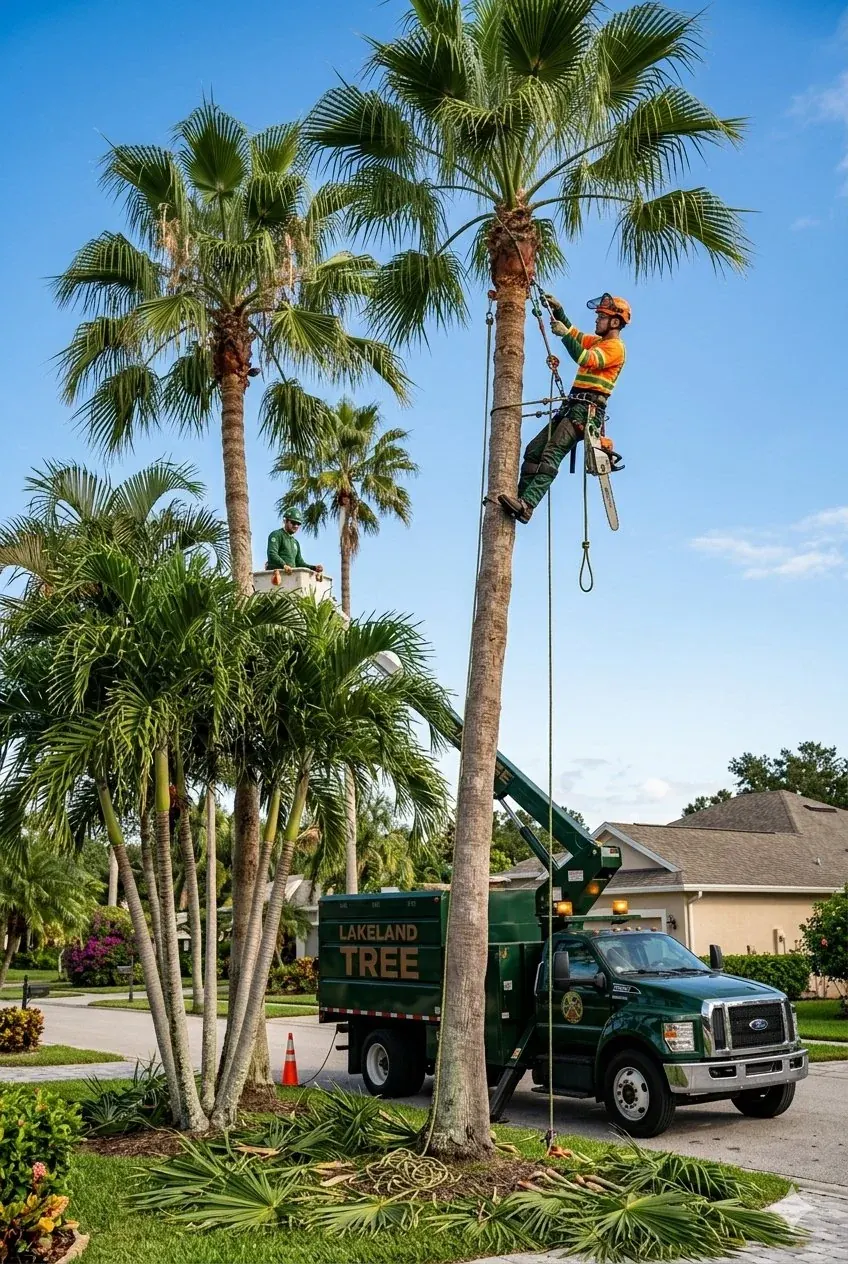
Lakeland is full of palms — the question is whether yours are getting the right care or slowly killing themselves through neglect. Our palm tree service in Lakeland covers everything from routine trimming and frond cleanup to full removal of dead, diseased, or unwanted palms across Polk County.
What separates palm tree work from regular tree work is the disease side. Florida palms are under constant pressure from lethal bronzing disease, ganoderma butt rot, Texas Phoenix palm decline, and fungal frond diseases — and a homeowner who can’t spot the early signs often loses a $2,000 palm to a $40 prevention problem. We train every Lakeland crew member on palm pathology specifically because we see it every week.
Lakeland palm species we service
- Sabal Palmetto (Florida’s state tree) — ubiquitous in Lakeland yards, hardy, low-maintenance. Trim only dead fronds.
- Queen Palm (Syagrus romanzoffiana) — fast-growing, common South Lakeland choice. Prone to nutrient deficiency — yellowing fronds are a warning sign.
- Royal Palm (Roystonea regia) — the tall, gray-trunked giants. Drops fronds with no warning. Trim before they fall on your car.
- Date Palms (Phoenix species) — Medjool, Canary Island, Sylvester. Highly susceptible to lethal bronzing — we assess every job.
- Washingtonian Fan Palm — tall, skirted, common along Bartow Road. Needs annual cleanup to prevent rats and fire risk.
- Foxtail, Pygmy Date, Areca, Coconut, Bismarck — smaller ornamentals frequently planted in Lakeland landscapes.
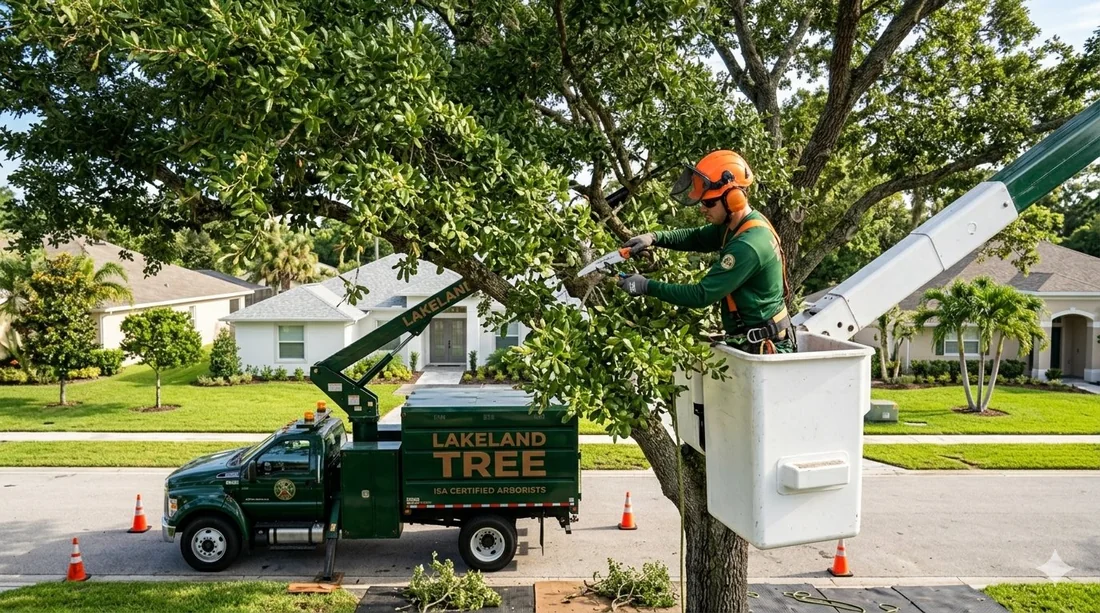
Palm trimming, removal, and disease assessment
What our Lakeland palm crew handles:
- Annual frond trimming — removing only dead and dying fronds (over-trimming “hurricane cuts” permanently damage palms)
- Seed pod and flower removal — before they drop fruit and make a mess
- Skinning — removing old boot tissue from Sabal and Washingtonian trunks
- Full palm removal — for dead, diseased, or unwanted palms
- Disease ID — lethal bronzing, ganoderma, Texas Phoenix decline (we’ve seen all three in Polk County this year)
- Storm cleanup — broken fronds, leaning trunks, palms uprooted by Gulf storms
Important: we do NOT do “hurricane cuts” (over-pruning palms into a V-shape). That’s a 1990s practice that’s been proven to weaken palms, slow growth, and actually increase storm damage. We trim to current ANSI standards.
Lakeland palm tree service pricing
- Palm trimming: $75-$300 per palm depending on height and access
- Small palm removal (under 25ft): $200-$450
- Tall palm removal (50ft+ Royal, Washingtonian): $800-$1,500
- Multi-palm packages: typically 15-20% discount when trimming 4+ palms in one visit
Need a quote on Palm Service in Lakeland?
Free on-site estimates, written quotes within 24 hours, and zero pressure. Call us or submit the form below.
Get a Free Palm Service Quote →Palm Service FAQs
Most Lakeland palms benefit from annual trimming, typically in spring after the last frond drop. Royal palms and Washingtonians may need twice-yearly cleanup. Avoid over-trimming — removing green fronds weakens the palm and slows growth.
Lethal bronzing is a fatal phytoplasma disease spreading through Florida palms, especially Sabal, Date, and Coconut species. Early signs include bronze-tinted older fronds, premature flower/fruit drop, and a stop in new growth. By the time it’s visible, the palm is usually beyond saving. We can identify it during any service visit.
Sometimes — if the lean is from recent storm wind and the root ball is intact, we can re-stake and brace. If the trunk is leaning due to ganoderma rot at the base, the palm is structurally compromised and needs to come down.
Yes. Palm stumps are typically softer than hardwood stumps and grind quickly. Most Lakeland palm stumps run $75-$200 to grind below grade.
Yes. Dry boot tissue on Washingtonian and Sabal palms is highly flammable and a known fire risk — especially near roof eaves. Annual skinning eliminates the risk.