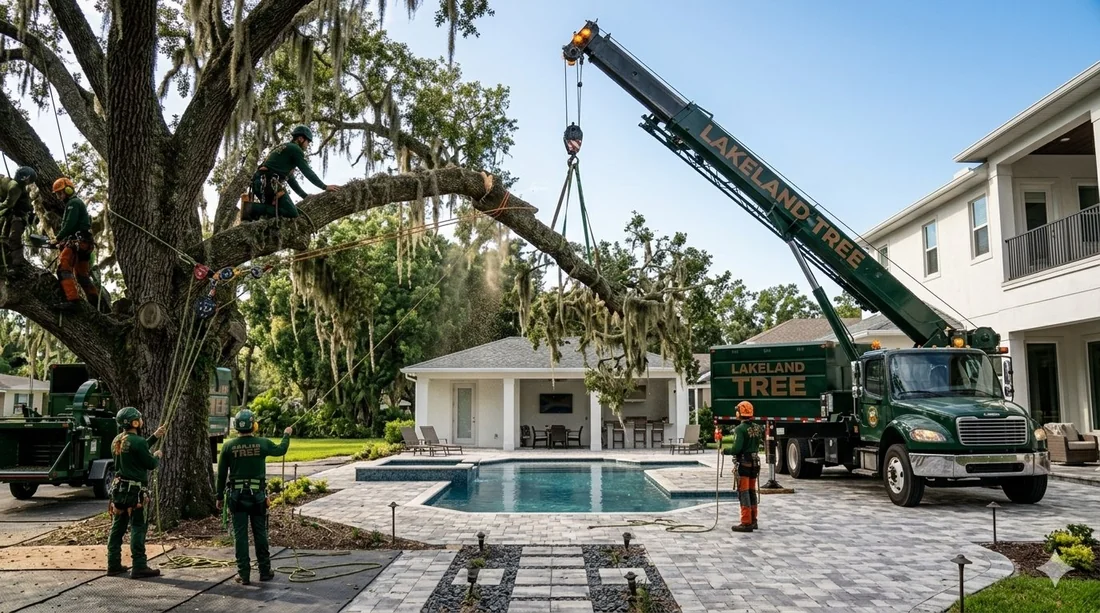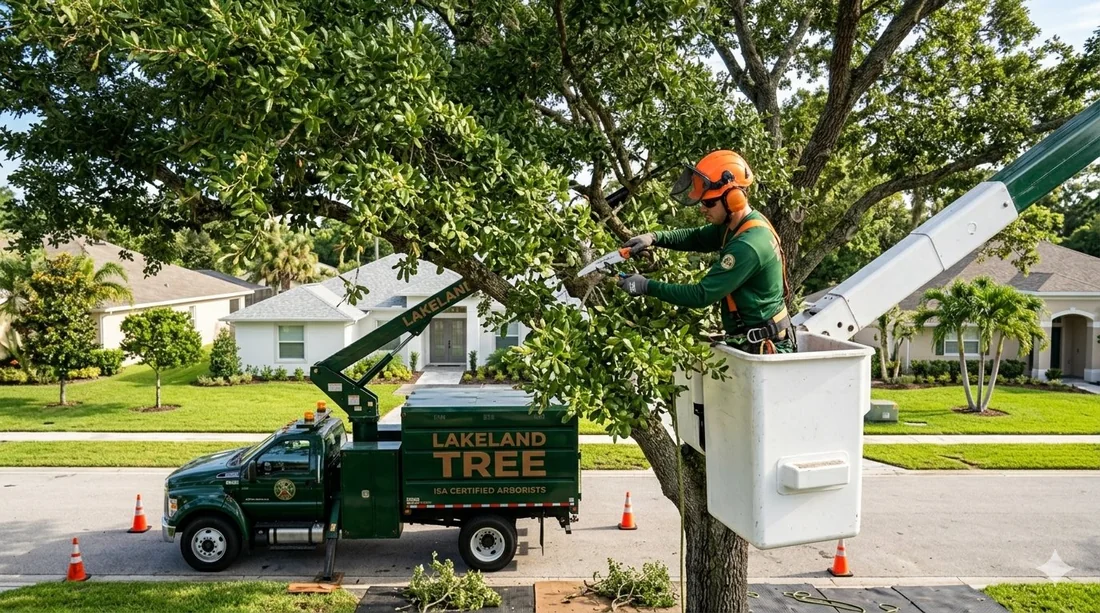
May and June are the right months to prune Polk County trees before hurricane season. Wait until July and you’re fighting both crew availability and the first tropical waves rolling in off the Gulf. Here’s the exact hurricane tree prep checklist we use on every Lakeland property.
Why timing matters
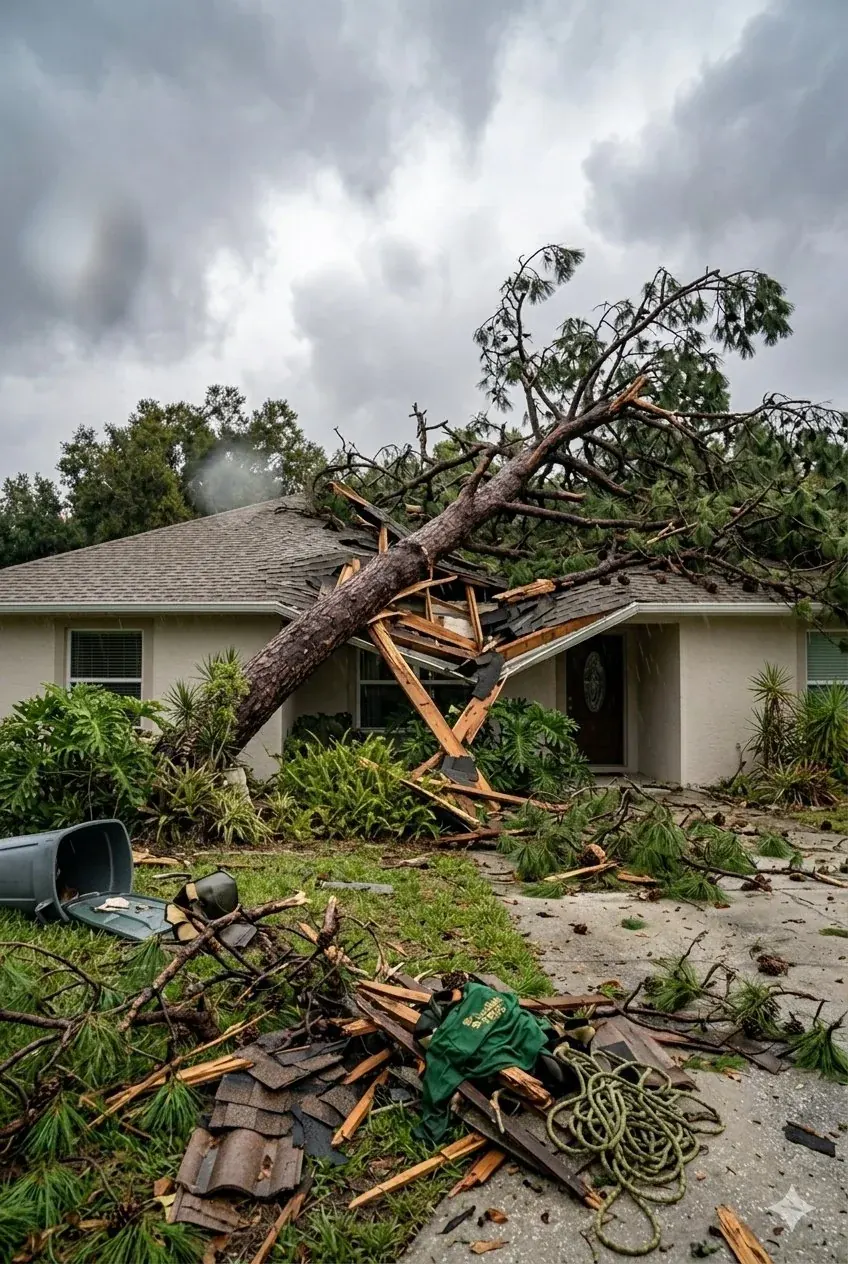
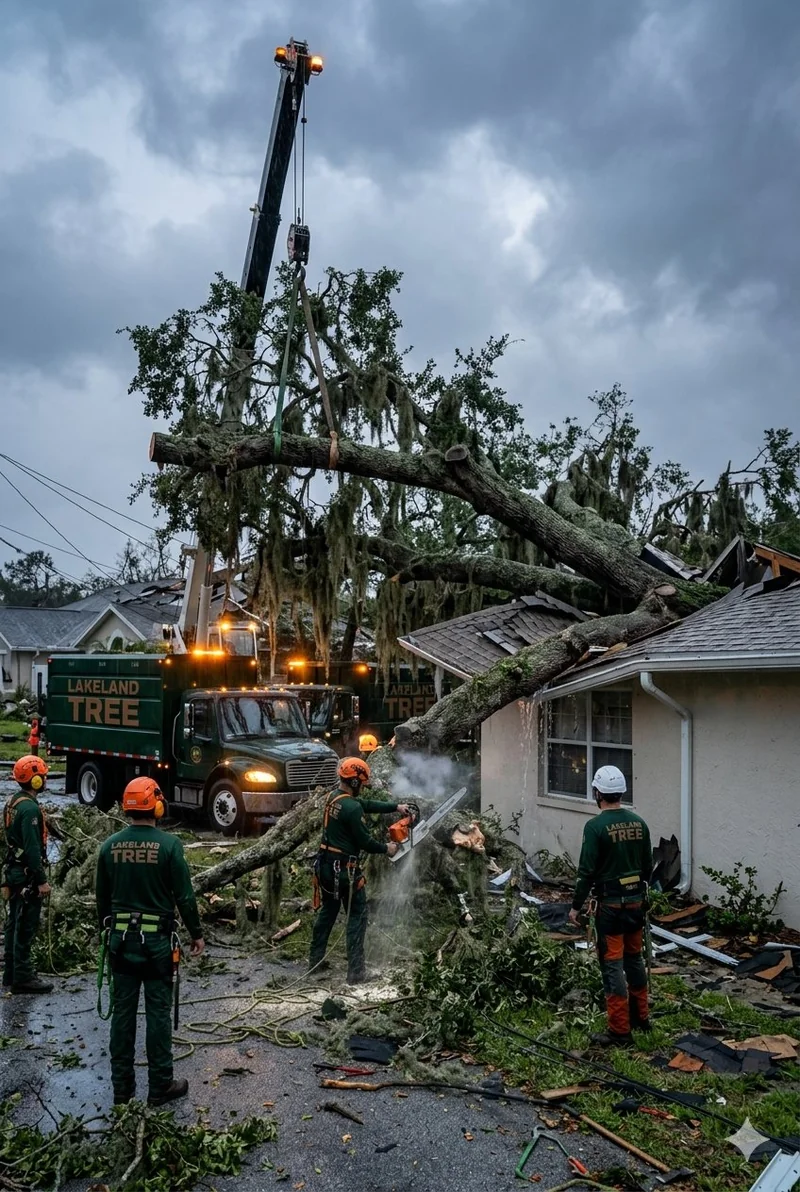
Tropical Storm Debby, Hurricane Idalia, Hurricane Milton — every recent Florida storm season has tested Polk County’s mature canopy. Trees that were properly pruned in spring fared much better. Trees that were “hurricane cut” (over-pruned into V-shapes) or never touched fared worst.
The Lakeland hurricane prep checklist
1. Walk your property and look up
You’d be amazed how rarely people actually look up at their own trees. Walk the perimeter of your Lakeland yard, look up at every major tree, and note:
- Dead branches (no leaves where there should be leaves)
- Hanging branches that didn’t fall after the last storm
- Branches over your house, driveway, vehicles, or pool
- Visible cracks where major branches meet the trunk
- Visible decay or hollows at the base
- Heavy moss or vine accumulation (increases wind load)
2. Schedule pruning by mid-May
Reputable Lakeland tree companies book up by mid-May for hurricane prep. The closer you get to June 1 (start of hurricane season), the harder it is to get on the schedule. Get a quote now if you haven’t already.
3. Prioritize canopy thinning over “hurricane cuts”
Proper hurricane prep = selective removal of 10-20% of canopy to allow wind to pass through, not catch like a sail. NOT stripping the canopy to bare branches (“hurricane cut”) — that actually weakens trees long-term and can increase failure.
4. Remove dead and dying limbs
Deadwood is what becomes airborne projectiles in 70+ mph winds. Every dead limb you can see is a future broken window, dented car, or damaged neighbor’s property. Tree trimming gets all of these.
5. Trim palms properly (don’t over-cut)
Palm boots, dead fronds, and seed pods need to come off. Healthy green fronds do NOT. Over-trimming palms into a V-shape weakens them. Annual palm trimming should remove only dead/dying fronds plus boots.
6. Document your trees before the storm
Take photos of every major tree on your property, dated. If a tree damages your home and you need to file an insurance claim, before-and-after documentation can dramatically speed approval.
7. Have an emergency tree service number saved
If a tree comes down on your house at 2 AM during a tropical storm, you don’t want to be Googling. Save our 24/7 line: (813) 725-9787.
Warning signs that mean call a pro right now
- Visible cracks at the base of the trunk
- Mushrooms or conks growing from the trunk or roots
- A tree that’s leaning more than it used to
- Hollow spots when you knock on the trunk
- Sap or weeping sap from previously healthy bark
- Large dead limbs that haven’t dropped on their own
Any of these = book an inspection now. Read our companion guide: 7 Signs Your Tree Is Dying.
What if it’s already June?
Not too late. We continue hurricane prep work through early July and accept emergency assessments through August. Just expect tighter scheduling. Get a quote today.
Need a Lakeland tree quote?
Free written estimates within 24 hours. No pressure, no hidden fees.
Get a Free Quote →