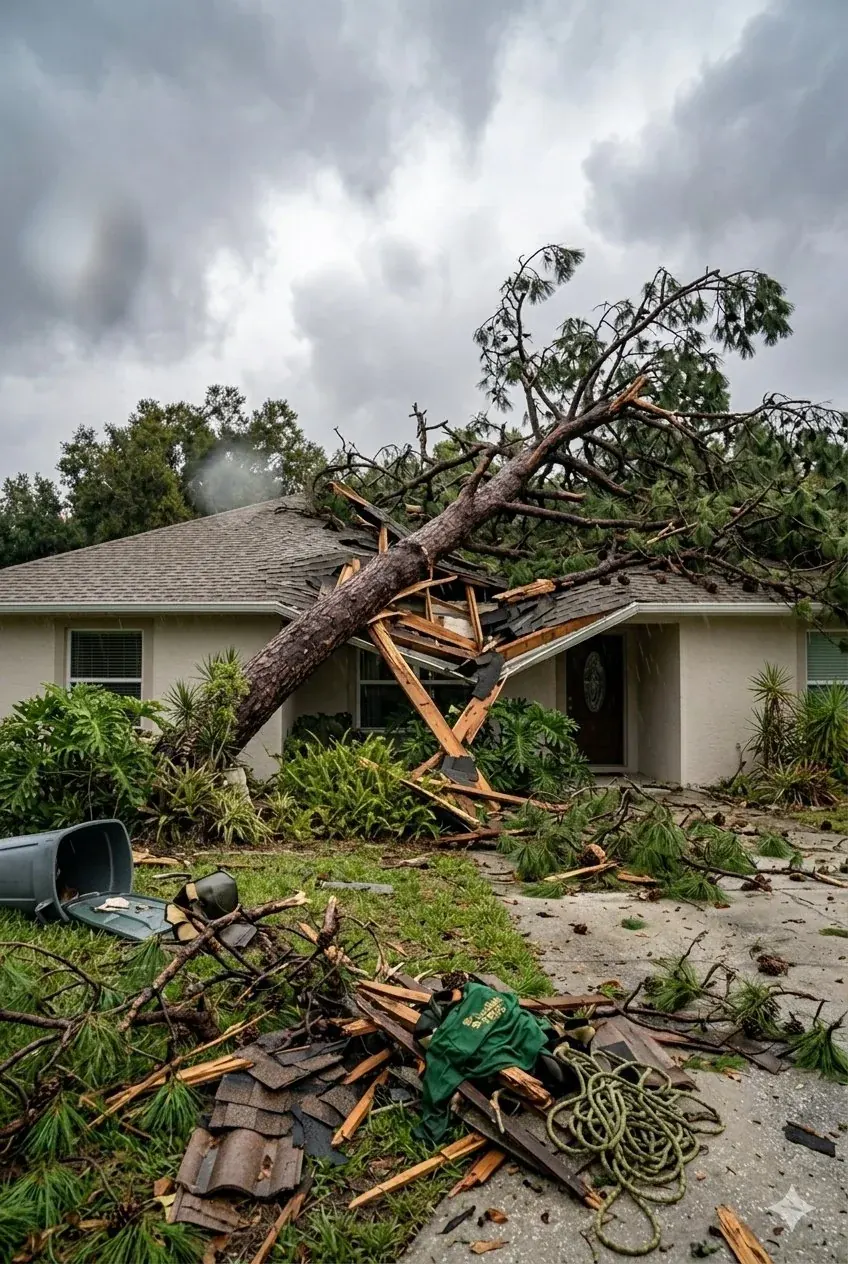
Mushrooms at the base. Bark falling off in sheets. Branches with no leaves in spring. We see these warning signs every week in Lakeland — and most homeowners spot them six months too late, when the tree has already failed and landed on something expensive. Here are the seven signs every Lakeland homeowner should know.
1. Dead branches in the canopy
Look up at your tree in late spring (April-May). If you see entire branches with no leaves while the rest of the tree is leafed out, those branches are dead. A few dead twigs are normal. Whole sections of dead canopy is a serious warning.
Common cause in Lakeland: root damage from construction, irrigation issues, or compaction.
2. Bark falling off in large sheets
Bark naturally exfoliates on some Lakeland species (especially Sycamore and Crepe Myrtle) — that’s fine. What’s NOT fine: large sheets of bark falling off oaks, pines, or other species that normally hold their bark. That’s usually a sign the cambium layer underneath has died.
3. Mushrooms or shelf fungus at the base
This is the big one. Mushrooms growing from the base of your tree are almost always a sign of advanced root or trunk decay. Specifically:
- Ganoderma (orange/red shelf-shaped fungus on Sabal palms and oaks) = the tree is structurally compromised. Often fatal.
- Armillaria (honey-colored mushrooms in fall) = root rot. Multiple trees in a yard can be affected.
- Hypoxylon canker (silvery-gray patches on bark) = stressed oaks. Often signals imminent failure.
4. The tree is leaning more than it used to
Trees naturally lean some — especially toward sunlight. What you’re watching for is progressive leaning. If the tree looked vertical two years ago and now obviously leans, that’s root failure. The root ball is shifting.
Other root-failure signs: cracking soil on the side opposite the lean, visible root ball lift, exposed roots that weren’t exposed before.
5. Hollow spots when you knock the trunk
Healthy hardwood sounds solid when you knock. Hollow trunks sound exactly like you’d expect — hollow. Walk around the tree and gently knock at the base. If you hear hollow sounds on more than one side, that tree has significant internal decay.
6. Sap weeping from previously healthy bark
Heavy, dark sap weeping from spots where bark looks normal otherwise = the tree is responding to internal damage. Common in stressed Live Oaks during Lakeland droughts and after pest pressure.
7. No spring growth where there should be
By mid-April, healthy Polk County trees should be fully leafed out. If your tree is still mostly bare in May, while every other tree in the neighborhood looks healthy, the tree is in serious trouble.
What to do if you see any of these signs
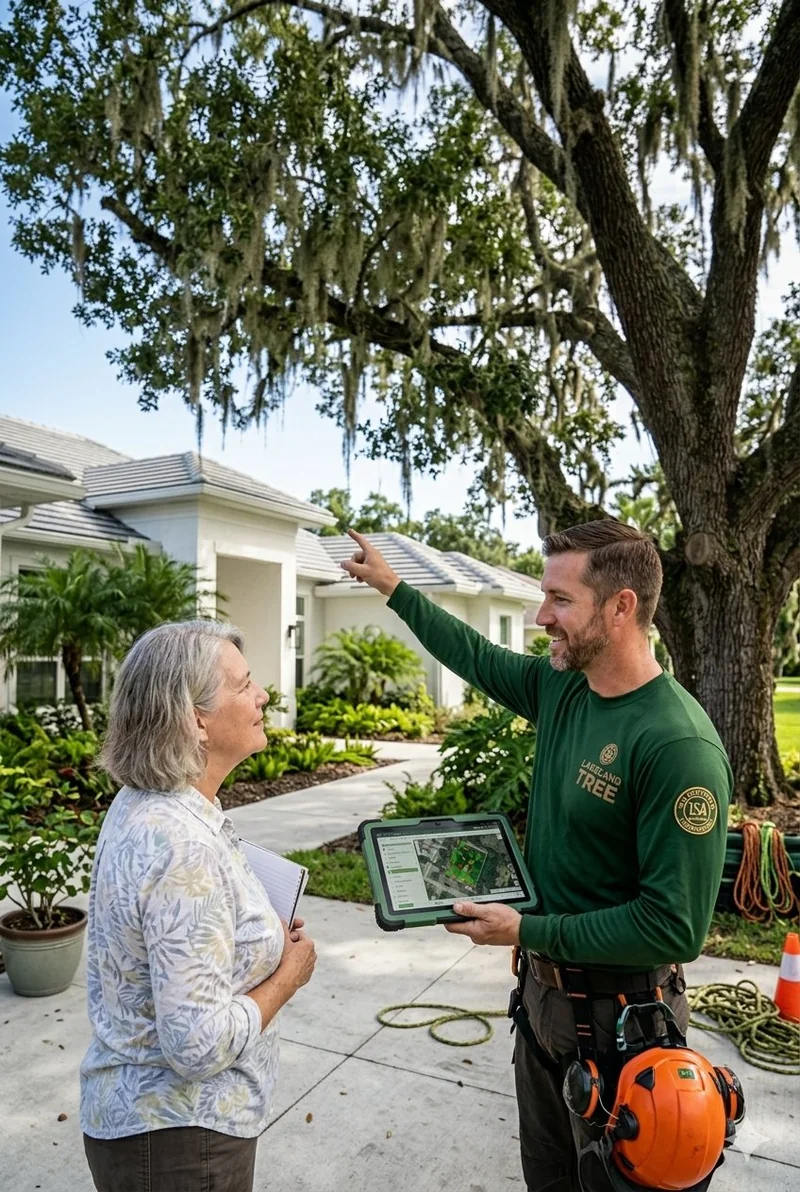
Don’t wait until hurricane season to find out. Schedule an assessment. We’ll come look at the tree, give you an honest opinion (sometimes we say “you’re fine for another 5 years,” sometimes we say “remove it now”), and only recommend removal if it’s genuinely needed.
Most Lakeland tree removals in late summer could have been planned in spring at a calmer pace. Most emergency calls were preceded by warning signs the homeowner just didn’t recognize.
When in doubt, call
(813) 725-9787 or request a free assessment. No pressure, no upsell — we’ll just tell you what we see.
Need a Lakeland tree quote?
Free written estimates within 24 hours. No pressure, no hidden fees.
Get a Free Quote →