In a lot of Polk County neighborhoods, the backyard orange or grapefruit tree is older than the house next door. Some were planted by the first owners. Some are survivors of groves that used to cover the land before the subdivision went in. Many of them now have thin canopies, bare branches and sour, lopsided fruit. The usual cause is citrus greening. Here is how to tell what is wrong with your tree, when it makes sense to remove a backyard citrus tree, and what the local rules say.
Polk County’s citrus history
Citrus is part of Polk County’s identity. According to USDA and FDACS citrus statistics, Polk was still Florida’s top citrus-producing county in the 2023–24 season, with about 3.86 million boxes. It also led the state in citrus acreage, with 58,516 acres. The University of Florida’s Citrus Research and Education Center, the oldest and largest UF/IFAS research station off the main campus, is right here in Polk, in Lake Alfred, just east of Auburndale.
Those numbers are a fraction of what they were. Florida produced 291.8 million boxes of citrus in 2003–04. By 2023–24 it produced 20.2 million. The biggest reason is huanglongbing, better known as citrus greening, and it hits backyard trees just as hard as commercial groves.
What citrus greening (HLB) is and how it spreads
Citrus greening is a bacterial disease that attacks a tree’s vascular system. FDACS says it was first found in the U.S. in south Miami-Dade County in August 2005. Key facts from FDACS and UF/IFAS:
- There is no cure. Once a tree is infected, it stays infected. In areas where the disease is established, trees decline and die within a few years.
- A tiny insect spreads it. The Asian citrus psyllid picks up the bacteria while feeding and carries it to other trees. It can also spread through grafting and by moving infected plants.
- It does not spread by contact. Tools, people, wind and rain do not spread it, so pruning the tree will not infect your neighbor’s.
- Other plants carry it too. FDACS lists citrus relatives such as Chinese box orange and curry leaf as hosts.
UF/IFAS is candid with homeowners: the risk of a Florida citrus tree becoming infected is high and ultimately unavoidable. Before HLB, citrus trees stayed productive for fifty years or more. Now they live shorter lives and produce poorer fruit.
Signs your backyard citrus has greening
UF/IFAS describes these symptoms:
- Blotchy mottled leaves. Yellow and green patches that do not match on the two halves of the leaf. Yellow or corky veins can also appear, but other problems cause yellow veins too.
- Small, misshapen or lopsided fruit. The fruit may stay green at the stem end, drop early, and taste bitter or salty.
- Dieback. Leafless branches, a thinning canopy and a stunted tree that never looks healthy.
Mottling can look like a nutrient deficiency. If you want a firm diagnosis, UF/IFAS Extension and FDACS both offer sample submission options. Our guide to signs your tree is dying covers decline symptoms in other species.
Citrus canker and other dooryard citrus problems
Greening is not the only disease in Polk yards. Citrus canker causes raised, corky lesions on leaves, stems and fruit, along with early leaf and fruit drop. FDACS notes the fruit is safe to eat but trees eventually succumb. Longtime residents may remember when canker meant state crews cutting down healthy backyard trees. That eradication program ran from 1995 until January 2006. After the 2004 and 2005 hurricanes spread canker across the main growing regions, the state declared it endemic and ended the program. Today there is no state-ordered removal for canker in a homeowner’s yard.
UF/IFAS also lists Phytophthora root rot and fungal diseases such as greasy spot, melanose and scab as common in Florida citrus. The fungal diseases can usually be managed with cleanup and copper sprays, so they are rarely a reason to remove a tree on their own.
When a backyard citrus tree should come out
FDACS does not require homeowners to remove infected dooryard citrus. UF/IFAS Extension still recommends removing a confirmed greening tree, because it keeps feeding the bacteria to psyllids that move on to other trees, including commercial groves. Extension agents also point out that the tree’s health and fruit will eventually decline to the point where most people want it gone anyway. We suggest removal when:
- HLB is confirmed, or symptoms are obvious and the fruit is no longer worth eating.
- Dieback has left large dead limbs over a roof, fence, pool cage or walkway.
- The trunk is split, decayed or loose at the base, which is common in very old trees.
- You are tired of spraying for psyllids and would rather put the space to other use.
If the tree is still productive and you enjoy it, you do not have to cut it today. UF/IFAS lists horticultural oil, neem oil, malathion and carbaryl as psyllid sprays available to homeowners, used within label limits. FDACS also runs a biological control program that releases tiny Tamarixia wasps, which attack psyllids, in dooryard citrus. Careful tree trimming to remove deadwood can buy a few more seasons. Just go in knowing that none of this cures an infected tree.
Permit rules for citrus tree removal in Lake Wales and nearby cities
Citrus is small by tree standards, but local rules still matter:
- Lake Wales requires a permit to remove most trees at least 4 inches in diameter and 15 feet tall, but its code specifically exempts removing individual citrus trees. That makes citrus tree removal in Lake Wales one of the simpler jobs on the Ridge.
- Winter Haven exempts single-family and duplex homes, as well as dead and diseased trees. See tree service in Winter Haven.
- Plant City protects native trees 5 inches and larger. Citrus is not native to Florida, but confirm with Planning and Zoning before cutting. See tree removal in Plant City.
- Auburndale and other cities: rules for private lots vary, so check with the city first. We do this research for every tree removal in Auburndale we quote.
Removing the tree and grinding the stump
Most backyard citrus trees come down quickly compared with a big oak. The job is usually priced toward the low end of our tree removal range. Two things make it trickier than it looks: thorny wood that tangles in fences and screens, and trees planted tight against a house or pool cage decades ago. We cut in sections, chip the brush, and haul it away.
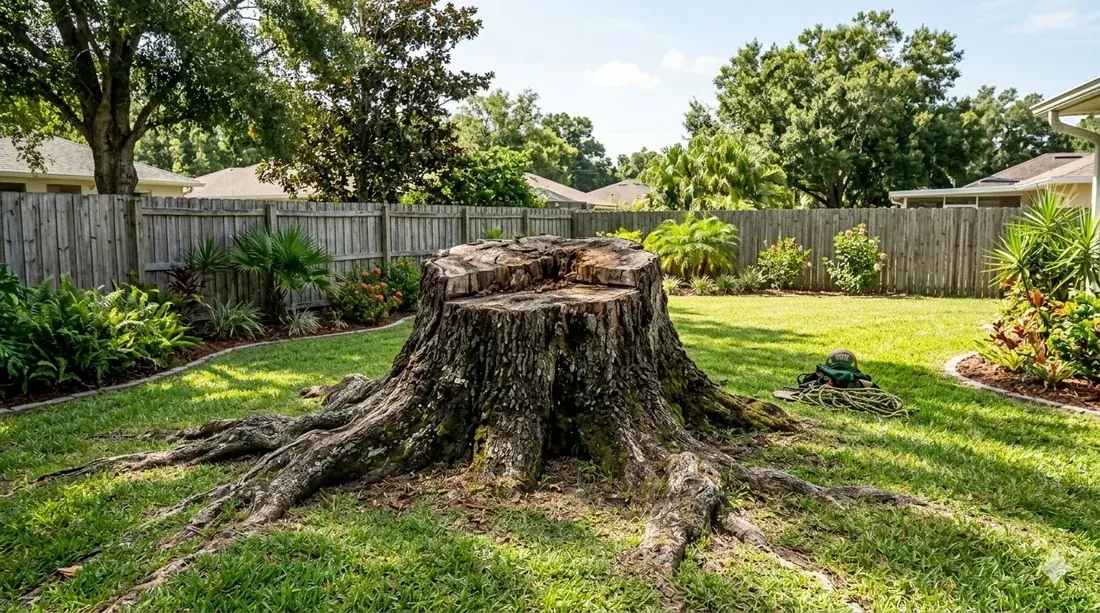
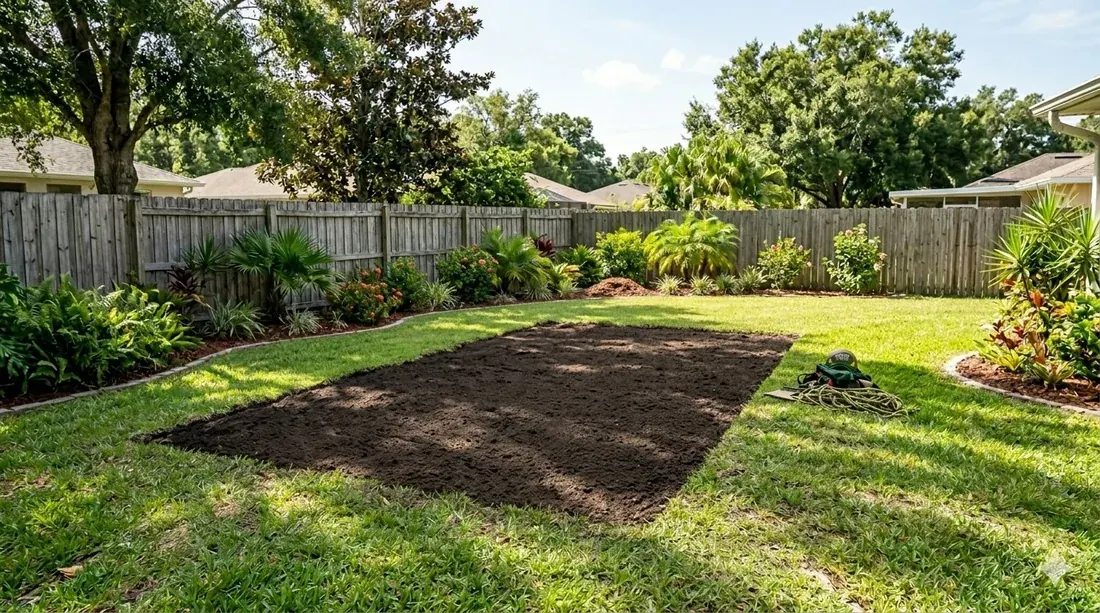
Old citrus stumps are small and easy to grind. Stump grinding takes them below grade so you can lay sod or plant a bed. On older ridge lots in Lake Wales and Bartow, we often find several stumps from trees removed years ago. Grinding them all in one visit is usually the best value.
Replant with citrus, or something else?
You can plant citrus again, but UF/IFAS Extension warns that new trees are at risk of reinfection and will need psyllid management. Moving citrus plants out of Florida is prohibited to limit disease spread. Many homeowners switch to a non-citrus tree suited to Central Florida, or plant a new citrus tree knowing the risk.
Have a declining orange or grapefruit tree? Call (813) 725-9787 or request a free quote. We will check the permit rules for your address and give you a written price for removal and stump grinding.
Need a Lakeland tree quote?
Free written estimates within 24 hours. No pressure, no hidden fees.
Get a Free Quote →