Clearing land in Polk County can mean very different jobs. It might be a half-acre lot in Auburndale overgrown with Brazilian pepper and laurel oak saplings. It might be a few wooded acres off a county road near Polk City, or a pasture edge in Mulberry where pines and palmettos have crept in. Ask three companies what it costs and you may get three numbers that are thousands of dollars apart. Here is what goes into a land clearing price, why a flat per-acre figure rarely holds, and the environmental rules that can matter more than the equipment.
What lot clearing in Polk County usually includes
“Clearing” is not one service. Before you compare quotes, decide which of these you need:
- Brush and undergrowth. Vines, palmetto, invasive shrubs and saplings cut and mulched or hauled.
- Small trees. Trees too big for a mower but not big enough to need climbing or rigging.
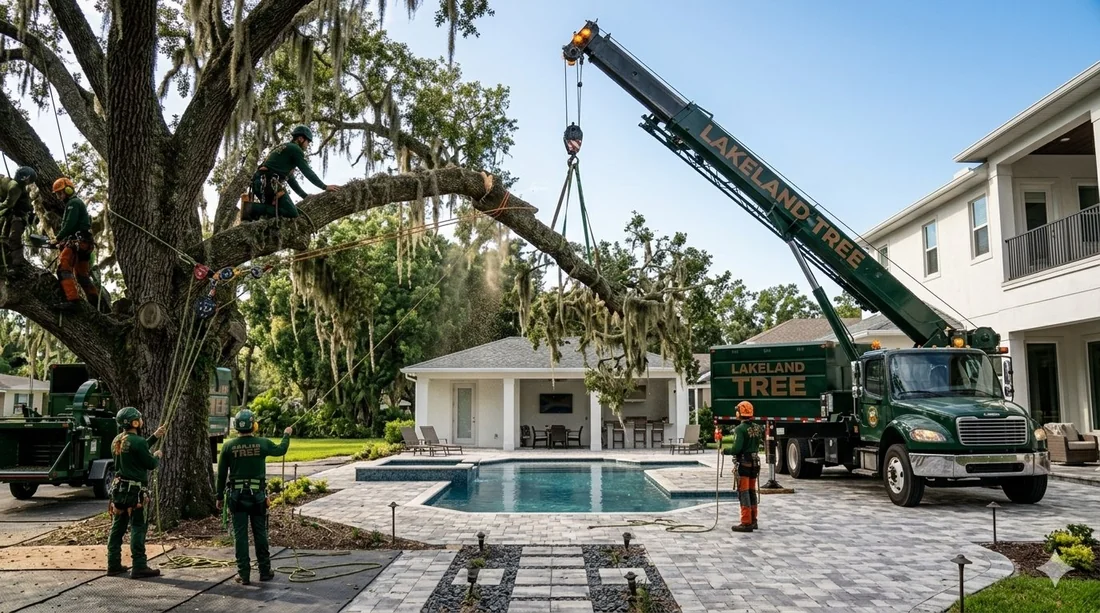
- Larger trees. Mature oaks and pines, especially near a house, fence or power line, which are really individual tree removal jobs.
- Stumps. Ground below grade, or dug out entirely if a builder needs the root mass gone for a slab or footer.
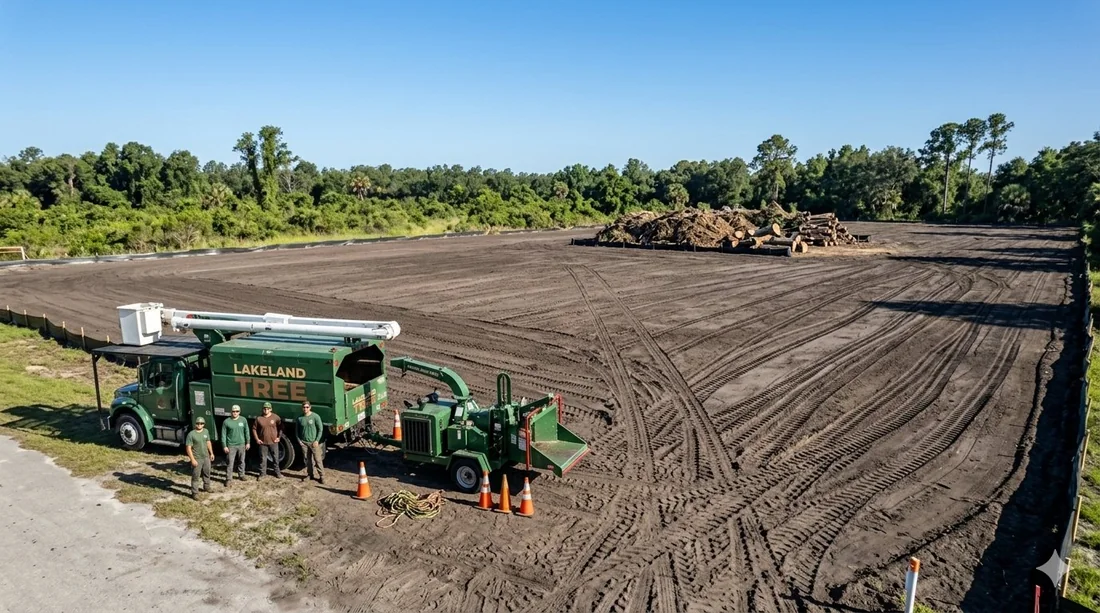
- Debris handling. Chipping, mulching in place, hauling to a disposal site, or a legal burn.
- Selective clearing. Keeping the best shade trees, removing everything under them and raising their canopy with tree trimming.
A quote that says “clear lot” with one number and no detail is hard to compare. Ask for each part to be listed.
The biggest cost drivers for land clearing
How dense the growth is
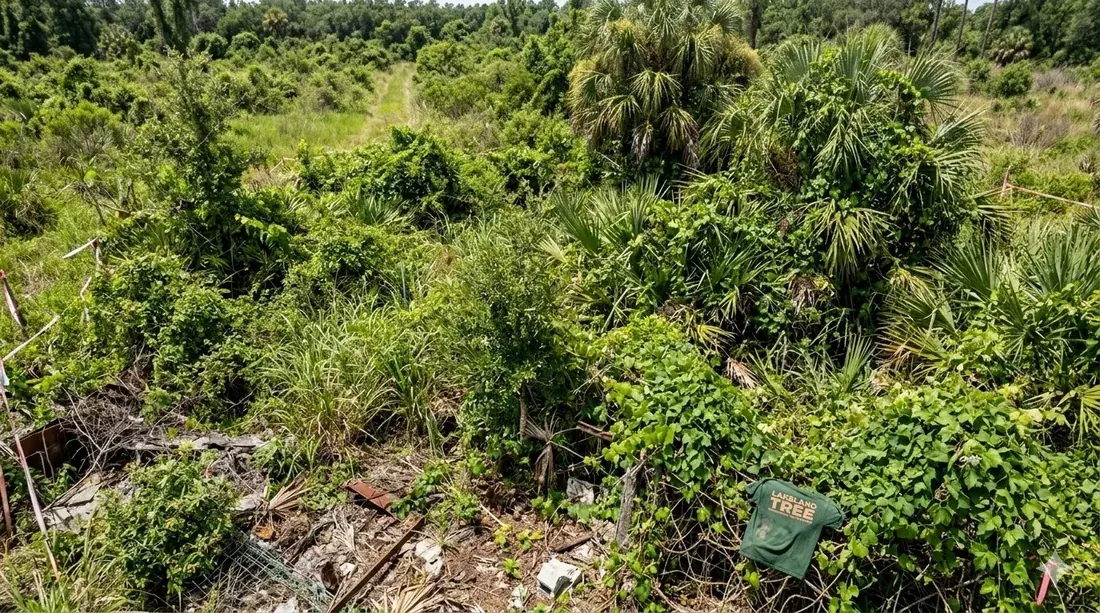
Light brush with scattered small trees goes quickly. A lot that has been left alone for 20 years, with trunks every few feet and vines tying them together, takes far longer and produces far more debris.
Tree size and count
A dozen saplings and a dozen mature laurel oaks are completely different jobs. Big trees take more cutting time, heavier equipment and more hauling. Species matters too: dense oak takes longer to process than pine.
Stumps and grubbing
Cutting at ground level is the cheap part. Removing stumps and roots is where time goes, whether by grinding or pulling them out with an excavator.
Access and ground conditions
Dry, sandy ridge soil that holds equipment is easier to work than low, wet ground. So is a lot with road frontage compared with one reached through a neighbor’s gate. Buried utilities, septic tanks and irrigation all slow the work. Florida’s one-call center, Sunshine 811, should be contacted before any digging.
What happens to the debris
Mulching in place is usually cheapest. Hauling it all away costs more because of truckloads and disposal fees. Burning needs authorization, as covered below.
Permits and environmental reviews
These can cost more in time than the clearing itself, especially in northern Polk.
General price ranges, and why per-acre numbers mislead
We do not publish a per-acre land clearing price, because no two Polk County lots are alike. For a rough benchmark, LawnStarter’s December 2025 cost guide puts national average land clearing at about $733 to $2,333 per acre for lightly forested land and $3,395 to $6,155 per acre for heavily forested land. Those are national figures, not Polk County quotes. Treat them as a sanity check, not a price.
The parts we can price more precisely are the tree and stump work. Across our service area, individual tree removal runs about $375 to $3,200 per tree, with most mid-size residential trees between $750 and $1,800. Large oak removal runs $1,800 to $3,500. Stump grinding runs $100 to $400 per stump. On a lot with only a few big trees and a lot of brush, the trees often drive the bill more than the acreage does. Our tree removal cost guide breaks down what moves those numbers.
Where stump grinding and tree removal fit in
If you are building, ask the builder how much of the root mass must be gone. Under a slab or footer, a contractor or engineer may call for full stump and root removal. For lawn, garden, fence lines or driveway edges, grinding stumps below grade is usually enough and disturbs much less soil.
If you are only reclaiming a yard, a common approach is to clear the brush, remove the problem trees, grind the stumps and leave the healthy oaks. That often costs less than scraping everything and gives you shade back years sooner. Trees near homes or lines should always be handled as proper removals, not pushed over with a machine.
Hauling, chipping or burning the debris
Land clearing produces a surprising amount of wood. In Florida, open burning of land-clearing debris requires an authorization from the Florida Forest Service before the fire is lit, and the Forest Service only authorizes burning vegetation that came from that site. Many cities also restrict burning inside city limits. For most residential lots in Auburndale, Mulberry and similar towns, chipping and hauling is the simpler path. Wood chips spread on site can also help hold bare sand in place during summer storms.
Green Swamp and wetland rules in northern Polk
If your land is near tree removal in Polk City or elsewhere in northern Polk, check this first. Florida law designates the Green Swamp Area as an Area of Critical State Concern, and its boundary includes areas around Polk City and Lake Juliana. The larger Green Swamp is where the Withlacoochee, Hillsborough, Ocklawaha and Peace rivers begin, and it recharges the Floridan aquifer that supplies much of Florida’s drinking water. Polk County’s Land Development Code has a chapter specifically for the Green Swamp, so land use and development there face extra review.
Wetlands anywhere in the county raise a separate issue. The Southwest Florida Water Management District, which covers most of Polk, requires an Environmental Resource Permit before construction activity that affects wetlands or changes surface water flows. The eastern part of the county falls under the South Florida Water Management District instead. The district strongly encourages landowners to contact it before doing any work in wetland areas. Cypress heads, wet flatwoods and marshy low spots are the usual signs. If your land has any of them, call the district and the county before clearing, not after.
Inside city limits, local tree rules can apply as well. Lake Wales, for example, requires a permit to remove trees 4 inches in diameter and 15 feet tall, with exemptions for listed invasive species such as Brazilian pepper and melaleuca. See our tree permit guide for how these rules generally work.
Getting a land clearing quote in Polk City, Auburndale, Mulberry or Lake Wales
You will get more accurate, comparable quotes if you have these ready:
- A survey or parcel map showing property lines and any easements.
- What the land is for: a house pad, a fence line, pasture, or just a usable yard.
- Which trees you want to keep. Flag them with tape.
- Known wells, septic systems, buried lines and irrigation.
- Whether you want stumps ground, pulled, or left low.
- Whether debris should be hauled or mulched on site.
We handle the tree removal, stump grinding and cleanup side of lot clearing from our Lakeland base. That includes properties in Lake Wales, Bartow and the rural roads in between.
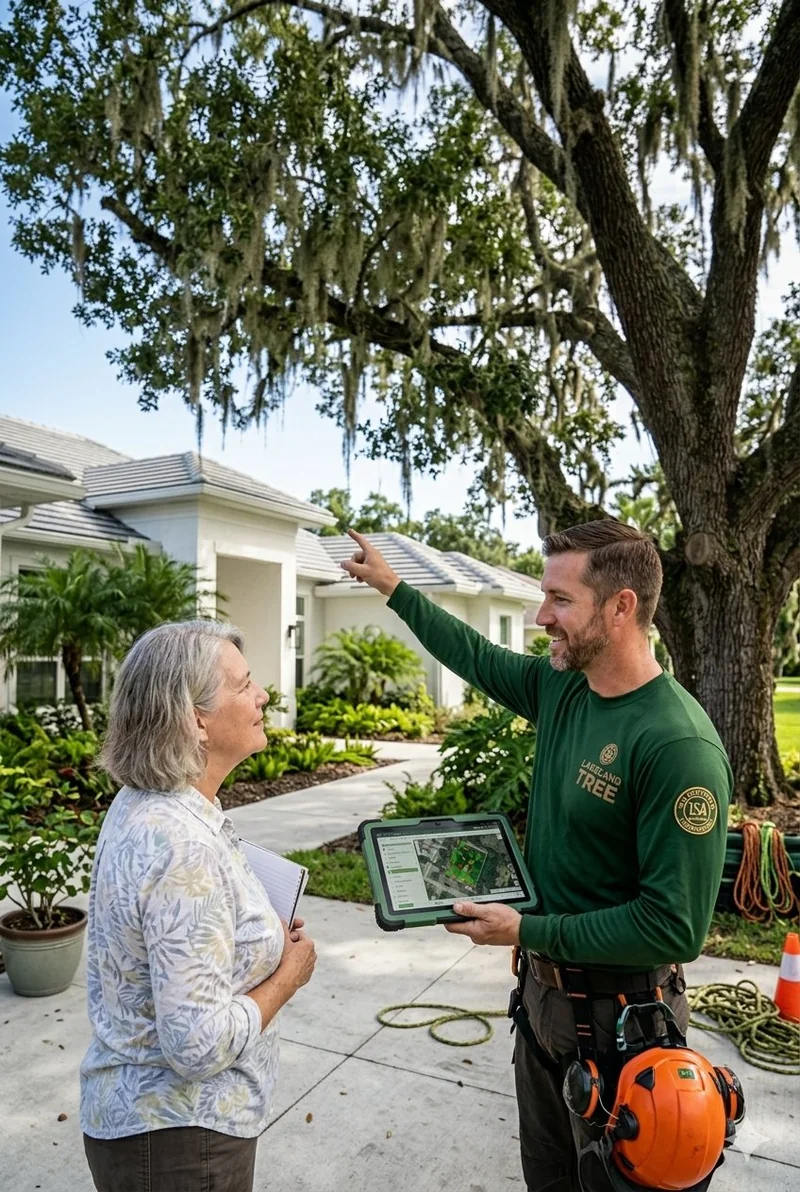
Have a lot or a few acres to open up? Call (813) 725-9787 or request a free on-site estimate. We will walk the land with you and itemize the trees, stumps and hauling so you know exactly what you are paying for.
Need a Lakeland tree quote?
Free written estimates within 24 hours. No pressure, no hidden fees.
Get a Free Quote →