A pine that was green in spring and rust-brown by midsummer is one of the most common calls we get in Polk County. Very often the culprit is a bark beetle, a pest smaller than a grain of rice that tunnels under the bark and cuts off the tree’s supply lines. By the time the needles change color, the damage is usually done. Here is how to spot bark beetles early, which beetles are really at work in Polk County, and when a pine needs to come down.
Which bark beetles attack pines in Polk County?
The Florida Forest Service lists five native pine bark beetles that matter in Florida: three Ips engraver beetles, the southern pine beetle and the black turpentine beetle. Which ones you are dealing with depends on where you live.
- Southern pine beetle (SPB). The most destructive pine beetle in the South, able to mass-attack and kill healthy trees during outbreaks. But the Florida Forest Service says SPB has never been recorded south of a line running roughly from Pasco County to Volusia County. Polk County sits south of that line, so SPB is very unlikely to be the problem in your yard.
- Ips engraver beetles. The sixspined ips, eastern fivespined ips and small southern pine engraver. The Florida Forest Service calls them among the most common and destructive pests of southern pines, and they are the usual suspects in Polk County pine deaths.
- Black turpentine beetle (BTB). The largest of the group, it attacks the lower trunk, usually within the bottom 6 to 10 feet, and can also move into freshly cut stumps.
Plenty of online advice about pine beetles was written for Georgia, Texas or north Florida, where SPB outbreaks happen. For Polk County homeowners, the practical focus is Ips and black turpentine beetles.
Slash, longleaf and sand pines: which trees are at risk?
All pines in Florida can host Ips and black turpentine beetles. That includes the slash pines common in Lakeland and Winter Haven yards, the longleaf pines found on sandy ridge lots and the sand pines that grow in the scrub around Lake Wales.
The key point is that these beetles go after trees that are already in trouble. According to the Florida Forest Service, Ips and BTB mostly attack pines that are stressed, declining or recently dead from something else, such as:
- Drought or flooding
- Lightning strikes
- Wind damage from storms
- Root disturbance from construction, trenching, grade changes or new driveways
- Disease or other insects
Healthy, vigorous pines are generally not attractive to these beetles and can usually fight them off. That is why pine deaths often cluster around a new pool, a lightning strike or a hard dry spell.
Warning signs: pitch tubes, boring dust and browning needles
Pitch tubes
Pitch tubes are small clumps of resin on the outer bark where beetles have bored in. Ips pitch tubes are usually about 2 centimeters across or smaller, reddish or whitish, and can appear anywhere on the trunk. BTB pitch tubes are larger, up to about 5 centimeters, and stay on the lower trunk. A tree that is badly stressed or already dying may not form pitch tubes at all, so their absence does not mean the tree is safe.
Reddish-brown boring dust
Look for fine, reddish-brown dust pushed out of small holes in the bark, collecting in bark crevices or at the base of the trunk. Boring dust is often one of the first signs of an Ips attack.
Needles turning yellow, then red, then brown
An infested pine’s needles fade from green to yellow to reddish-brown. This is often the first thing homeowners notice, but the Florida Forest Service notes that by the time the needles are brown, the beetles have often finished their life cycle and left.
Exit holes and galleries
Small, scattered round holes about 1 to 2 millimeters wide mark where new adult beetles have chewed their way out. Under loose bark, Ips leave long, straight tunnels running with the grain of the wood.
Why an infested pine usually cannot be saved
This is the hard part. The Florida Forest Service states that trees successfully colonized by Ips engraver beetles will usually die, and that no insecticide currently available will reliably save an infested tree. The UF/IFAS decision guide My Pine Is Under Attack makes the same point: spraying the bark of a dying pine does not reach the beetles inside it.
There is one partial exception. A pine with only a light black turpentine beetle attack at the base can sometimes tolerate and recover from it. Preventive insecticide sprays can also protect a healthy, high-value pine during a short period of stress, but that is prevention, not a cure. If you see pitch tubes and boring dust all along the trunk and the crown is fading, plan for the tree to come down.
When a pine must come down: tree removal decisions
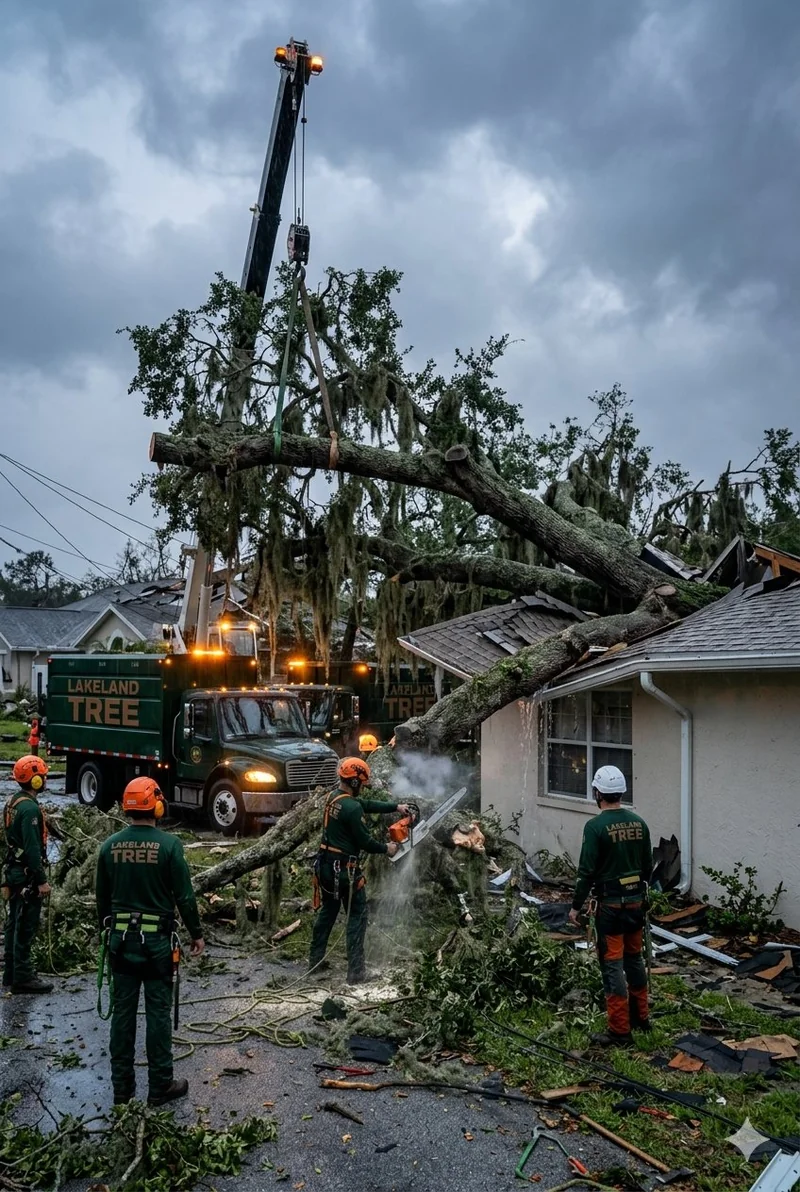
In forests, the Florida Forest Service often recommends leaving scattered beetle-killed pines alone, because heavy equipment can stress the remaining trees. A home lot is different. The agency says that in urban and residential settings, infested trees should be removed if they could fall on people or property. We recommend pine tree removal sooner rather than later when:
- The pine is within falling distance of your house, pool enclosure, driveway, fence or a neighbor’s property.
- The needles are still green but the trunk shows fresh pitch tubes and boring dust. UF/IFAS flags this stage as urgent when other mature pines are nearby, because the next generation of beetles has not yet flown.
- The crown is brown or gray and the bark is loosening. The beetles may be gone, but a dead pine is a falling hazard that only gets worse.
- The tree was hit by lightning or bent in a storm and is now showing beetle signs.
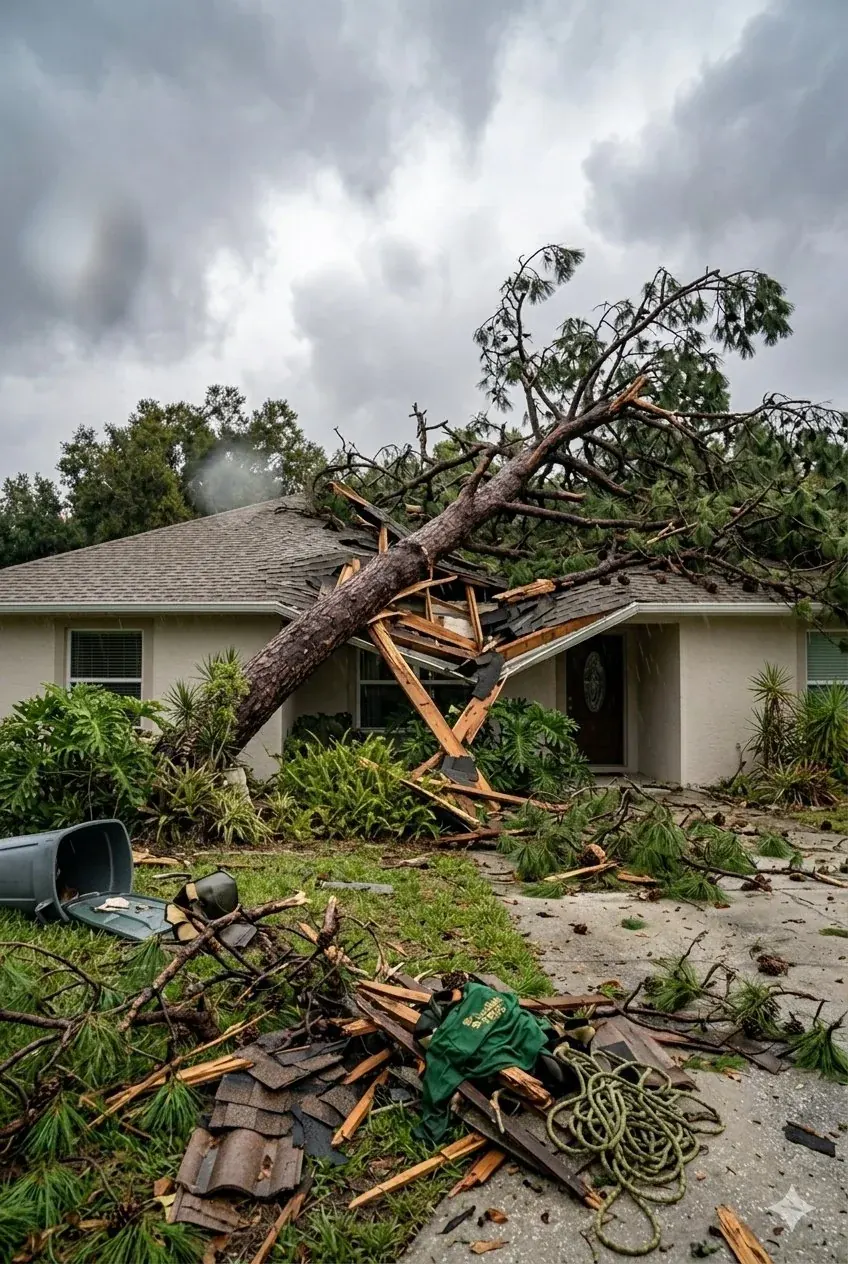
A dead pine standing in open acreage far from buildings can sometimes be left for wildlife, and UF/IFAS Extension notes that snags provide habitat. On most residential lots, though, there is simply nowhere for a 60-foot pine to fall safely. If a dying pine has already cracked, split or started leaning toward the house, treat it as an emergency tree service call rather than waiting for a routine slot.
Because black turpentine beetles can move into freshly cut stumps, it makes sense to add stump grinding to a pine removal rather than leaving a fresh stump in the yard.
After storms and lightning, beetle trouble grows
The Florida Forest Service warns that Ips and black turpentine beetles are likely to be more abundant in the months and years after a hurricane. Wind can twist and damage a pine inside without breaking it, and those hidden injuries can lead to decline long after the storm. UF/IFAS researchers saw this firsthand after Hurricane Charley: three months after the storm, 27% of the south Florida slash pines and 48% of the longleaf pines that were still standing had died.
Polk County knows this pattern well after the 2004 season and the storms since. After any major storm, walk your property and check the pines again over the following year, not just the week after. Our guide to signs your tree is dying covers other warning signs to watch for.
Pine tree service across Polk City, Lake Wales and the rest of Polk County
Pines are a big part of the landscape in the rural parts of our service area. Polk City sits in the Green Swamp region, and when we handle tree removal in Polk City on larger rural lots, there are often several pines close together, so one stressed tree is a reason to check its neighbors. On the sand ridge, homeowners looking for tree service in Lake Wales often have sand pines and longleaf pines on dry, sandy lots that feel drought stress quickly. We also handle pine work for homeowners in Lakeland, tree cutting in Auburndale and Winter Haven tree services.
Protecting the pines you still have
Since these beetles target weakened trees, keeping your remaining pines healthy is the best defense. Based on Florida Forest Service guidance:
- Water during long dry spells. Supplemental watering during extended dry periods helps keep pines vigorous.
- Protect the roots. Avoid trenching, soil compaction and grade changes under pines, and keep heavy equipment off the root zone.
- Remove damaged pines promptly. A dying pine can draw beetles to the area.
- Plan work for cooler months. Florida Forest Service guidance favors doing thinning and clearing in the coolest months, when beetle activity slows.
- Diversify. A mix of species in the yard means one pest cannot take everything.
Seeing pitch tubes, boring dust or a fading crown? Call (813) 725-9787 or request a free quote. We will look at the tree and the pines around it, tell you honestly whether it needs to come down, and give you a written price for removal and cleanup.
Need a Lakeland tree quote?
Free written estimates within 24 hours. No pressure, no hidden fees.
Get a Free Quote →