Drive down almost any older street in Lakeland or Bartow and you will see oaks hung with gray curtains of Spanish moss, often with little tufts of ball moss dotted along the branches. We regularly hear the same worry from homeowners: “Is that stuff killing my tree?” The short answer is no. The longer answer is that heavy moss can be a clue that something else is wrong with the tree, and that is worth understanding before you spend money on the wrong fix.
Epiphytes, not parasites: what is hanging from your oak
Despite the names, neither Spanish moss nor ball moss is a moss. Both are flowering plants in the bromeliad family, close relatives of the air plants sold in garden centers. Spanish moss is Tillandsia usneoides and ball moss is Tillandsia recurvata.
They are epiphytes, meaning they grow on other plants for support and access to light but do not feed on them. UF/IFAS explains that these plants take up water and minerals from rain and the moisture that runs across leaves and down branches. Unlike mistletoe, which is a true parasite that taps into a tree’s tissue, Spanish moss and ball moss do not harm the tree they sit on. UF/IFAS Extension in Polk County has made the same point on its own podcast about Spanish moss.
The gray-green crusty patches you may also see on oak bark are usually lichens, a partnership between a fungus and an alga. UF/IFAS groups them with Spanish moss and ball moss as harmless.
Spanish moss vs. ball moss: how to tell them apart
- Spanish moss hangs in long, stringy strands that can drape several feet down from a branch. It is gray when dry and turns greener after rain. In spring, usually around April, it produces small, fragrant flowers.
- Ball moss grows in tight, round clumps, typically about 3 to 6 inches across. It anchors in branch crooks and bark grooves with small roots that serve as anchors rather than for feeding, and it can even grow on power lines.
Both can live on almost any tree, but in Polk County you will see them most on live oaks and laurel oaks.
When heavy moss signals a thinning canopy
Here is the part many homeowners miss. Spanish moss and ball moss both prefer high light. When a tree is healthy and dense, its own leaves shade the inner branches. When a tree is declining and dropping leaves, more sunlight reaches inside the canopy, and the moss takes off. UF/IFAS explains that leafless branches on declining trees let in more sunlight, and epiphytes thrive on it. The moss follows the decline; it does not cause it.
So a sudden increase in moss is a symptom worth following up. If your oak looks more gray than green, look past the moss for these signs of a thinning canopy:
- Bare branch tips or whole limbs with no leaves in late spring
- More sky visible through the crown than in past years
- Dead twigs and small branches in the interior, often where ball moss clusters
- Mushrooms or shelf-like conks at the base or on large roots
- Cracks, cavities or oozing patches on the trunk
- Root damage in recent years from a driveway, pool, trenching or new construction
Our guide to signs your tree is dying goes deeper on these symptoms. The Florida Forest Service notes that hurricane damage can stress trees for months or even years, so an oak that took a beating in a storm may start looking mossier a season or two later.
Does Spanish moss add storm weight? What UF/IFAS says
This is where sources disagree a little. The UF/IFAS publication Spanish Moss, Ball Moss, and Lichens: Harmless Epiphytes says moss adds an insignificant amount of weight and is almost never a factor in broken branches. UF/IFAS Gardening Solutions and the Escambia County Extension office note that very heavy growth can shade leaves and, in dense cases, add enough weight to break branches.
Our practical read: on a healthy oak, moss is not what breaks limbs in a storm. Decay, weak branch unions and dead wood are. When a moss-covered limb does fail, it is usually because the limb was already dead or declining. That is why the right fix is almost always to deal with the tree’s structure, not strip the moss.
Should you remove moss? Hand removal and copper sprays
For a healthy tree, you do not need to. UF/IFAS notes that Spanish moss provides habitat for wildlife: bats roost in it, zebra longwing butterflies shelter in it at night, and birds such as the parula warbler and Baltimore oriole use it for nesting. It will also likely grow back, so removal is never permanent.
If you still want less of it, a few cautions:
- Hand removal and pruning are the methods the Escambia County Extension office recommends for an overabundance of ball moss. Pulling clumps within reach is fine; climbing into the canopy with a ladder is not.
- Copper sprays are sold for moss control, but UF/IFAS warns there is evidence copper-based products may damage tender new growth on oaks.
- Chiggers can be found in Spanish moss lying on the ground, according to UF/IFAS, so wear gloves when you clean up fallen moss.
Tree trimming vs. oak tree removal: which one does your tree need?
If heavy moss is a sign of a thinning canopy, the real question is how far the decline has gone.
When pruning is enough
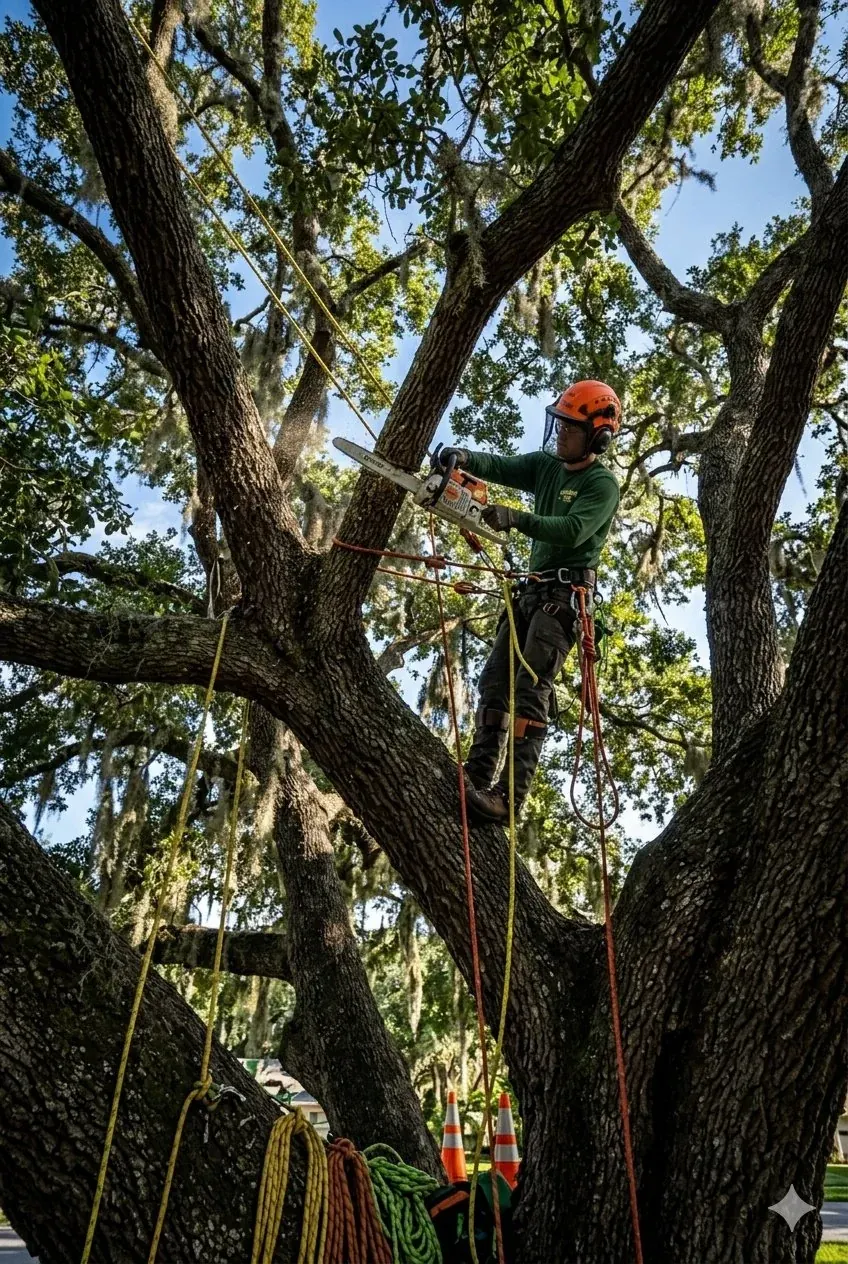
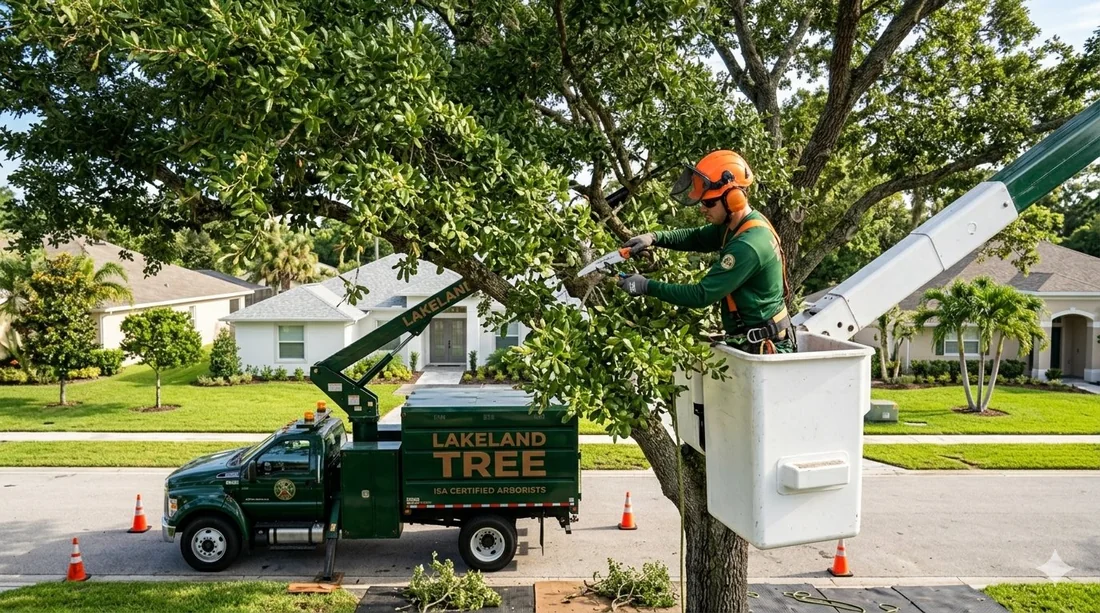
If the oak is structurally sound but has dead interior wood, a moss-clogged crown and a few declining limbs, professional tree trimming is usually the answer. Removing deadwood takes away the bare, sunny perches where ball moss thrives, and much of the moss comes out with the dead branches. It also takes out the limbs most likely to fail in the next storm. Stick with selective pruning, not heavy cutting; our hurricane tree prep checklist explains why over-thinning backfires.
When removal makes more sense
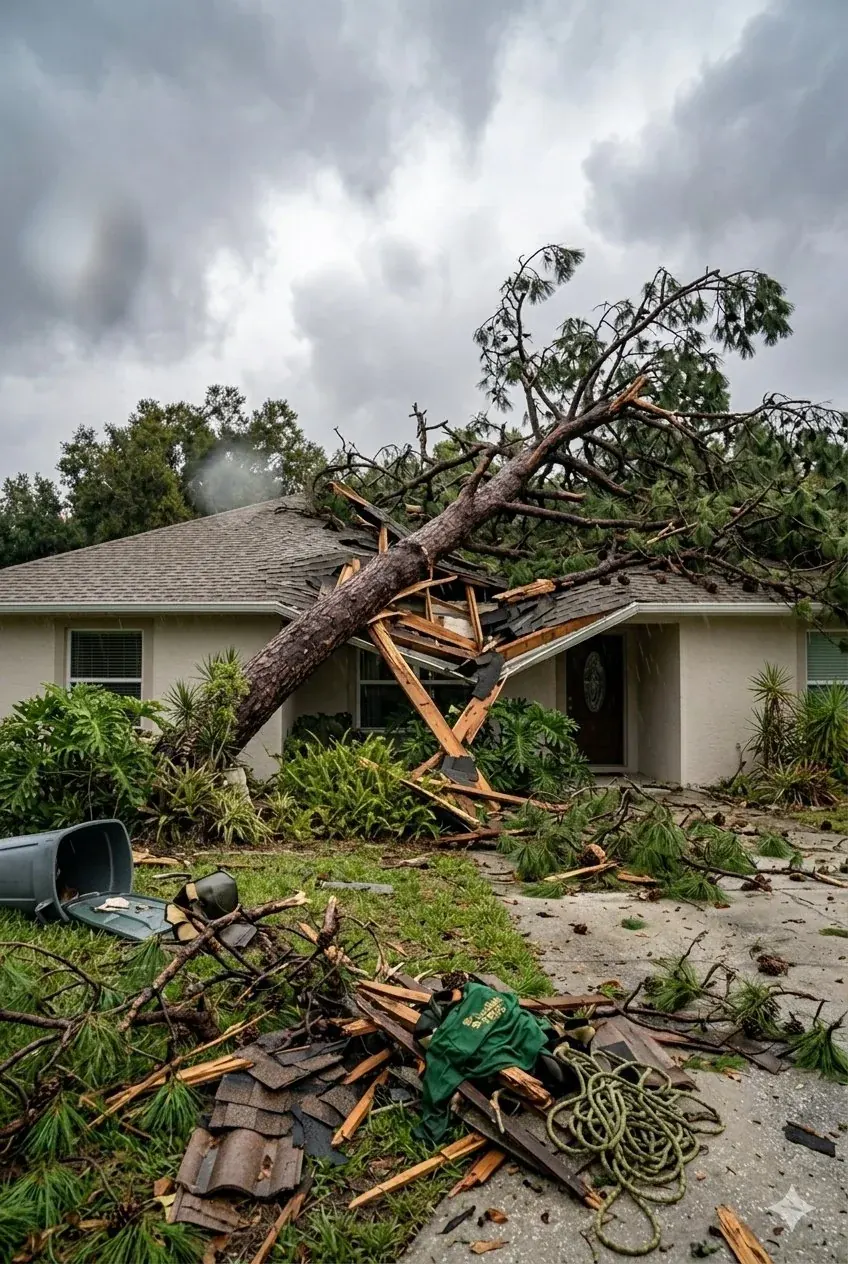
If the moss is just the visible symptom of advanced decline, such as a large share of the crown dead, conks at the base, a hollow trunk or a new lean, pruning will not bring the tree back. That is when oak tree removal is the safer call, especially if the tree stands over your roof, pool or driveway. If a moss-heavy limb has already cracked or come down on the house, call our emergency tree service line instead of waiting. Laurel oaks in particular tend to decay from the inside as they age; our comparison of laurel oak vs. live oak explains the difference.
Moss-draped oaks in Lakeland, Bartow and across Polk County
Moss is part of what makes Polk County neighborhoods look the way they do. Older Lakeland neighborhoods are full of mature oaks, which is why so much tree trimming in Lakeland starts with a moss question, and tree service in Bartow often means working on large oaks in the city that calls itself the City of Oaks and Azaleas. We see the same pattern on lakeside lots when doing tree trimming in Winter Haven, and on older properties around Auburndale and tree removal in Mulberry. In every case, the moss tells us where to look, and the tree itself tells us what to do.
If an oak is on public right-of-way or near power lines, check with your city or electric utility before any work, since they may handle trimming there.
Not sure whether your oak is just mossy or actually declining? Call (813) 725-9787 or request a free quote. We will look past the moss at the canopy, trunk and roots, and tell you plainly whether the tree needs pruning, removal or nothing at all.
Need a Lakeland tree quote?
Free written estimates within 24 hours. No pressure, no hidden fees.
Get a Free Quote →